
What Are Working Papers in Accounting? A Practical Guide for Firms



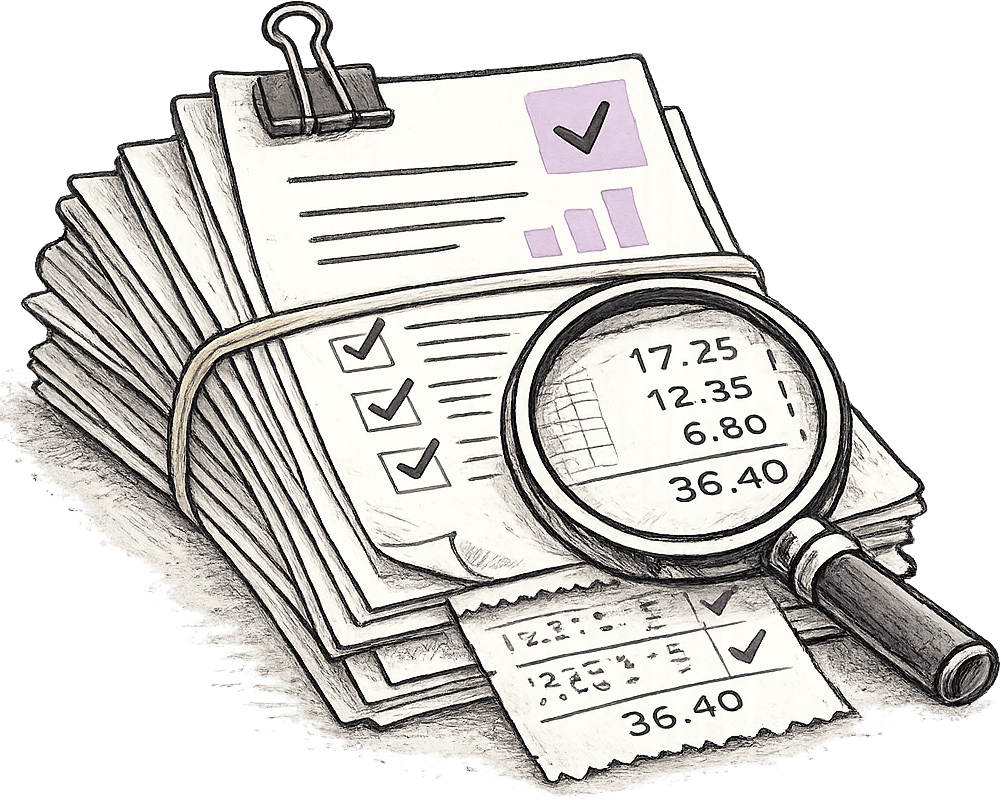
Working papers are the documents an accountant assembles to support the figures in a set of accounts or a tax return — the evidence layer between the client's records and the final numbers. They show what was done, what was found, and why the conclusions hold. When HMRC opens an enquiry, when a professional body runs a practice assurance review, or when next year's team picks up the file, the working papers are what gets examined.
That definition sounds tidy. In most firms, the reality isn't — and that gap is what this guide is about.
What do working papers actually include?
For a typical year-end job, the working paper file covers everything that connects the client's records to the signed accounts:
- The records pack — trial balances, ledgers, bank reconciliations, stock valuations, payroll data and loan schedules gathered from the client
- The workings — lead schedules, reconciliations, depreciation journals, accruals and prepayments, each tied to its supporting evidence
- The judgement trail — queries raised with the client and their answers, review notes, adjustments and the reasoning behind them
- The sign-off — drafts, the final accounts, and the approvals that made them final
The same logic applies to tax computations, VAT workings and audit files: inputs, workings, conclusions, approvals. If a number in the accounts can't be traced back through this chain, the working papers have a hole in them.
Who owns working papers — the firm or the client?
The firm, in the general case. Working papers created by an accountant in the course of an engagement are the property of the firm that prepared them, not the client — they are the firm's professional record of its own work. (Client-owned books and records handed over for the job remain the client's; the distinction matters during disengagements, when the successor accountant's request lands.)
Your working papers are a firm asset you are professionally accountable for — and in many firms, nobody could actually assemble them. The lead schedules live in Excel on a manager's drive, the client's answers to queries live in individual inboxes, the evidence for the stock adjustment lives in an email attachment from March, and the review comments lived in a conversation. The firm owns the asset; it just doesn't possess it in any form it could hand to an inspector.
Why do working papers matter more now?
| The pressure | Why it bites now |
|---|---|
| 🔍 Scrutiny | An enquiry or assurance visit doesn't ask whether the work was done. It asks you to produce the evidence, in context, sometimes years later |
| 🗄️ Retention | Obligations outlast the engagement, and "it's in someone's inbox" is not an archiving policy |
| 🚶 Turnover | When the preparer leaves, the papers are supposed to be the institutional memory. They can only do that if they live outside one person's head and hard drive |
| ⏱️ Review speed | Partners lose more time hunting for evidence than reviewing it, and in January that is the difference between a bottleneck and a production line |
Three pressures have tightened at once. First, scrutiny: an HMRC enquiry or a practice assurance visit doesn't ask whether the work was done — it asks you to produce the evidence that it was done, in context, sometimes years later. Second, retention: working papers carry obligations that outlast the engagement, so "it's in someone's inbox" is not an archiving policy. Third, staff turnover: when the person who prepared the file leaves, the working papers are supposed to be the institutional memory — they can only do that job if they exist somewhere other than that person's head and hard drive.
There's a quieter fourth pressure: review speed. Partners lose more time to hunting for evidence than to reviewing it. A reviewer who can open the lead schedule, see the linked evidence, and read the query thread in one place signs off in a fraction of the time — which, in January, is the difference between a bottleneck and a production line.
What does good working paper practice look like?
The firms that pass inspections calmly tend to share four habits, none of which is exotic:
- One file per job, one home for the file. Every schedule, query, adjustment and approval attached to the client and the year — not distributed across inboxes, personal drives and desktops
- Evidence embedded, not referenced. The supporting document sits with the working, so the trail doesn't depend on someone finding "the email from March"
- Version control on the workings. One current version, a history of who changed what, and no "final_FINAL_v3" archaeology at review time
- Review points recorded where the work is. Queries, answers and sign-offs threaded against the file, so the judgement trail survives as well as the numbers
As Ben Symons, director at Serenity Accounting & Bookkeeping, a Xero-based practice, put it about moving to this way of working: "Before, if something wasn't finished, it just sat in my head. Now I can see everything — what's been sent, what's signed, and what's outstanding. That peace of mind is huge."
This is also where structure pays twice: prior-year conversations, evidence and notes stay attached to the document history, so next year's preparer starts from a complete file instead of a blank one.
Do you need working papers software?
Spreadsheets will always be where much of the working happens — the question is where the file lives. Purpose-built working papers software keeps the workings, embedded evidence, queries and approvals in one structured, version-controlled client file with a full review trail — connected to the year-end accounts process it feeds. Workiro is one such system, built for accounting firms and integrated with the practice tools firms already run.
The test worth applying to your own firm is the inspector's test: if a practice assurance reviewer asked for the complete working paper file on a client you finished eight months ago — workings, evidence, queries, approvals — how many places would you have to look, and how long would it take? If the honest answer is "several" and "a while", the working papers exist; they just aren't ready. To see what a structured working paper file looks like end to end, book a demo.
General information for accounting and professional-services firms, not advice – verify anything time-sensitive with the relevant tax authority or your professional body before acting on it.
Keep Every Client File Defensible — Without Slowing Down.
Book a demo




Industry-leading data security, for total peace of mind
We are a listed public company; currently protecting data for many of the world’s biggest professional brands.